Check Spare Wheel Tyre Pressure Before Long Trip Uk
Direct answer: check the spare wheel before a long UK trip because unused spares can lose air quietly. Confirm whether you have a full-size spare, a temporary space-saver, sealant only or no spare at all, then check the pressure and usage limits before the journey begins.
A flat spare turns one problem into two. It is especially frustrating on holiday departures, airport runs and motorway trips because the car may be fully loaded and time-sensitive. RAC tyre-pressure guidance explicitly includes the spare where fitted, which is the part many drivers forget.
Long-trip spare-wheel checklist
- Open the boot floor and confirm what your car actually carries.
- Read the handbook or tyre markings for the spare's required pressure.
- Inflate the spare cold before loading luggage over it.
- Check the age, tread, sidewall condition and valve.
- If it is a temporary spare, note speed, distance and usage restrictions.
- If the car has sealant only, check the expiry date and know the process before you need it.
Full-size spare versus space-saver
A full-size spare may be closer to an ordinary road wheel, but it still needs pressure and condition checks. A space-saver is different: it is a temporary mobility tool with restrictions. TyreSafe's spare and repair advice highlights the temporary nature of these spares and the need to observe their inflation requirements and limits.
Do not assume a universal spare pressure. Some temporary spares use higher pressures than normal road tyres, while some cars have no spare at all. The only safe answer is the handbook, tyre marking or vehicle-specific instruction.
Where a portable pump helps
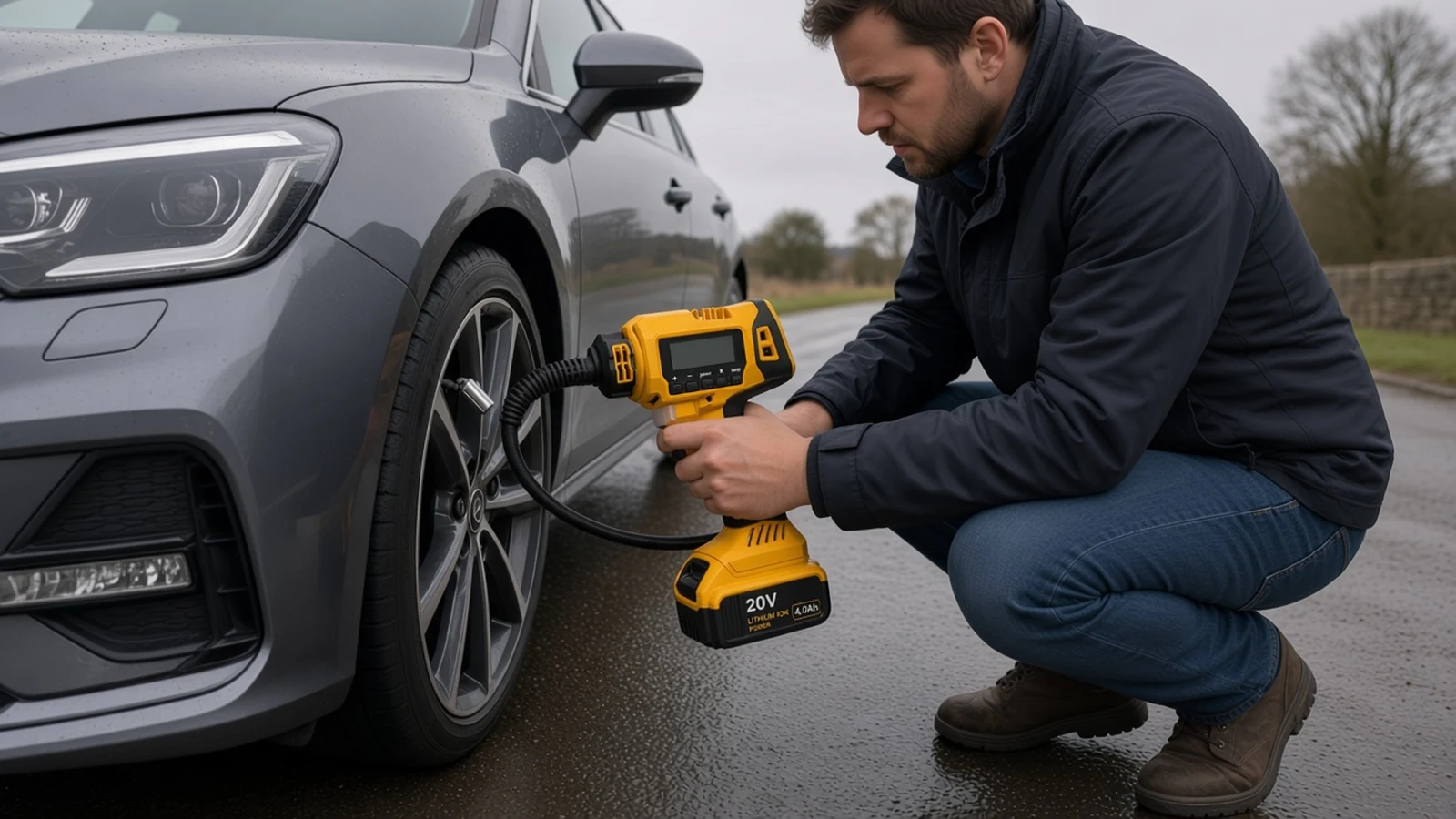
A compact inflator can be useful before the trip because it lets you top up a low spare without unloading the car at a forecourt. It can also help after a tyre change if the spare is intact but slightly low. Michelin UK's tyre inflation advice also reminds drivers that spare tyres still need periodic checks.
There are limits. Do not rely on a small consumer pump to recover every temporary spare from flat, to make an old cracked spare safe, or to repair the damaged road tyre. If the spare is visibly damaged, too old, not holding pressure or outside its permitted use, the correct next step is replacement or professional help.
If your car has no spare
Many modern cars carry sealant and an inflator instead of a spare. That can work for some small tread punctures, but not for sidewall damage, large holes or blowouts. Read the sealant instructions before a trip, check expiry, and make sure you know who you will call if the damage is outside the kit's limits.
Best time to check
Check the spare before the boot is full. The worst time is when luggage, bikes, pushchairs or camping gear are already packed on top of it. For a family trip, make it part of the same routine as oil, coolant, screenwash and tyre pressures: do it the evening before rather than in the departure panic.