First Winter Commute Tyre Pressure Routine Uk
The first cold-snap commute often brings a TPMS light because overnight temperature drops can pull pressures down near the warning threshold. Build a short cold-morning top-up habit before the lamp becomes a weekly surprise.
Pirelli’s TPMS guidance notes that temperature swings can trigger the lamp when pressures sit near threshold. The RAC TPMS guide likewise says to check and inflate cold because temperature changes affect pressure and TPMS.
A weekday winter routine
- Sunday: confirm the boot pump is charged and adaptors are in the case.
- Weekday mornings: before driving, spend about five minutes on a cold scan of all four corners against the door-card PSI/BAR.
- Set the placard target on a digital auto-stop pump; use the LED if the driveway is still dark.
- If one corner keeps losing pressure overnight, or the lamp flashes after correct pressures, book a garage—do not keep topping up forever.
That routine sits inside the broader Highway Code Annex 6 habit of weekly cold pressure checks before journeys. It is not a substitute for winter tyres, and this article does not invent a PSI drop per degree Celsius.
When to stop DIY top-ups
Repeated overnight loss on one corner, visible damage, or flashing TPMS after correct pressures need professional inspection. For the diagnostic sequence on a cold morning, see TPMS warning light on a cold morning, and keep the longer habit documented in the weekly cold tyre pressure checklist.
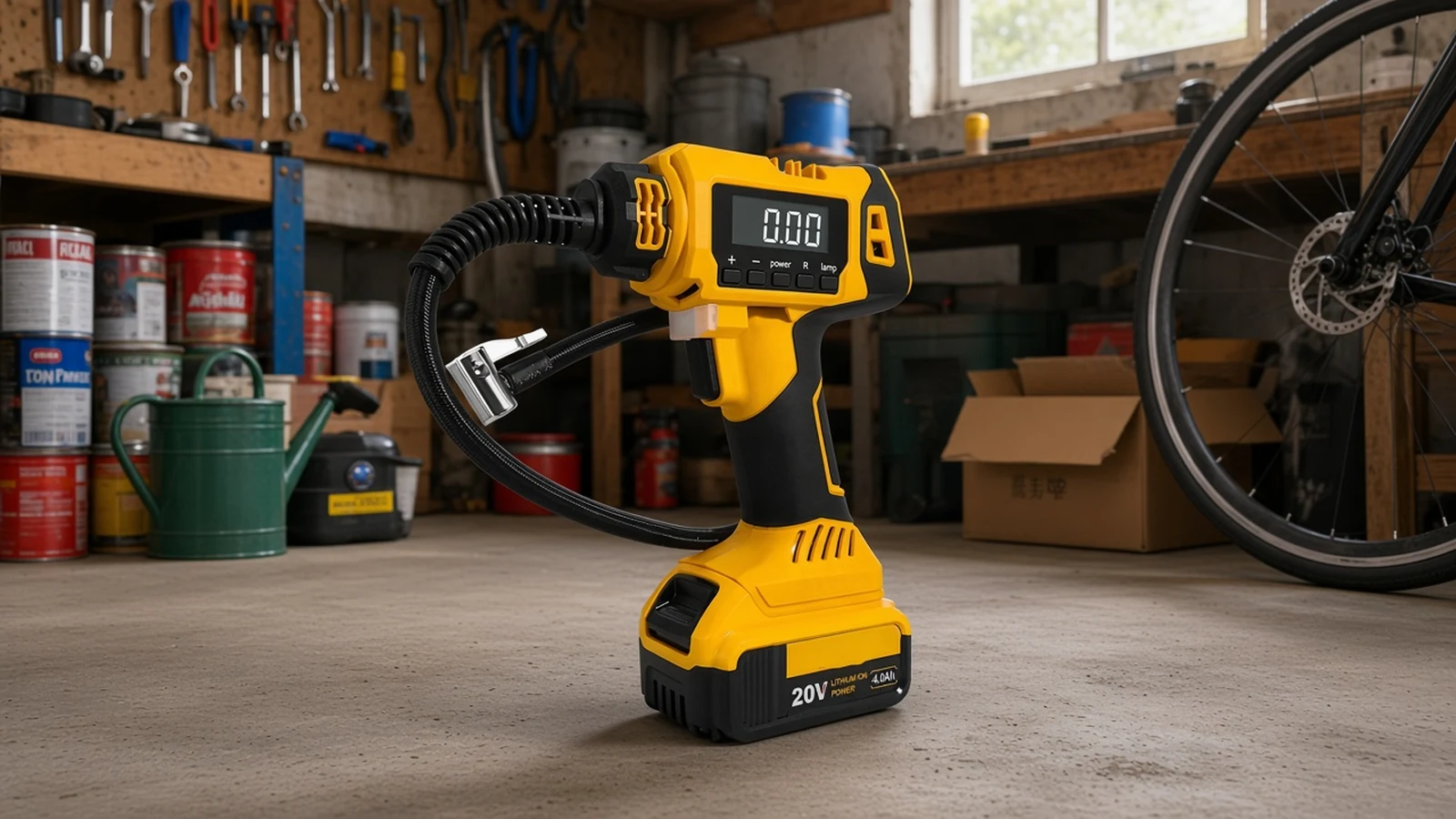
Keeping a charged cordless LED pump in the boot—such as the Ipflinpor cordless tyre inflator—makes the dark UK start manageable without waiting for an open forecourt.