How To Clear Tpms Light After Inflating Tyres Uk
Direct answer: inflate the tyres to the vehicle's stated pressure first. After that, some UK cars clear the TPMS light after a short drive, while others need a reset through the dashboard, infotainment menu or handbook process. If the light returns, flashes, or stays on after correct pressures, stop treating it as a simple top-up problem.
The TPMS light is not cleared by hope or by overinflating. It is cleared by correcting the pressure, following the vehicle's reset process, and checking whether the system still sees a fault. Toyota UK's TPMS explainer is a useful public example because it separates pressure correction from reset behaviour.
Step-by-step after the warning appears
- Stop somewhere safe and look for obvious damage before adding air.
- Find the correct cold pressure from the placard, fuel flap or handbook.
- Inflate all monitored tyres to that figure, using the correct unit.
- Refit valve caps and check that no tyre is visibly losing air.
- Drive a short distance if your handbook says the system relearns while driving.
- Use the car's reset menu only after the pressures are correct.
Halfords' tyre-warning-light reset guidance reflects the everyday UK process: fix the pressure first, then reset according to the vehicle. Avoid copying button sequences from another make or model, because reset menus vary.
Solid light, flashing light, returning light
A steady tyre-pressure light commonly means the system has detected low pressure or a pressure change. A flashing light can point more towards a system or sensor issue, depending on the vehicle. A light that goes out and returns after a day is often more useful than annoying: it may show a slow puncture, valve leak or wheel issue.
If the warning came on soon after a wheel change, tyre replacement or sensor work, the answer may be calibration or sensor service rather than more air. If the car has a temporary spare fitted, the system may also behave differently; use the handbook rather than guessing.
Do not use the reset as a cover-up
A reset tells the car what "normal" should be after you have made the tyre pressures correct. It should not be used to hide one soft tyre or silence a warning before a long trip. The Highway Code guidance on warning displays is blunt in practical terms: warning displays should be investigated promptly.
What the pump can and cannot do
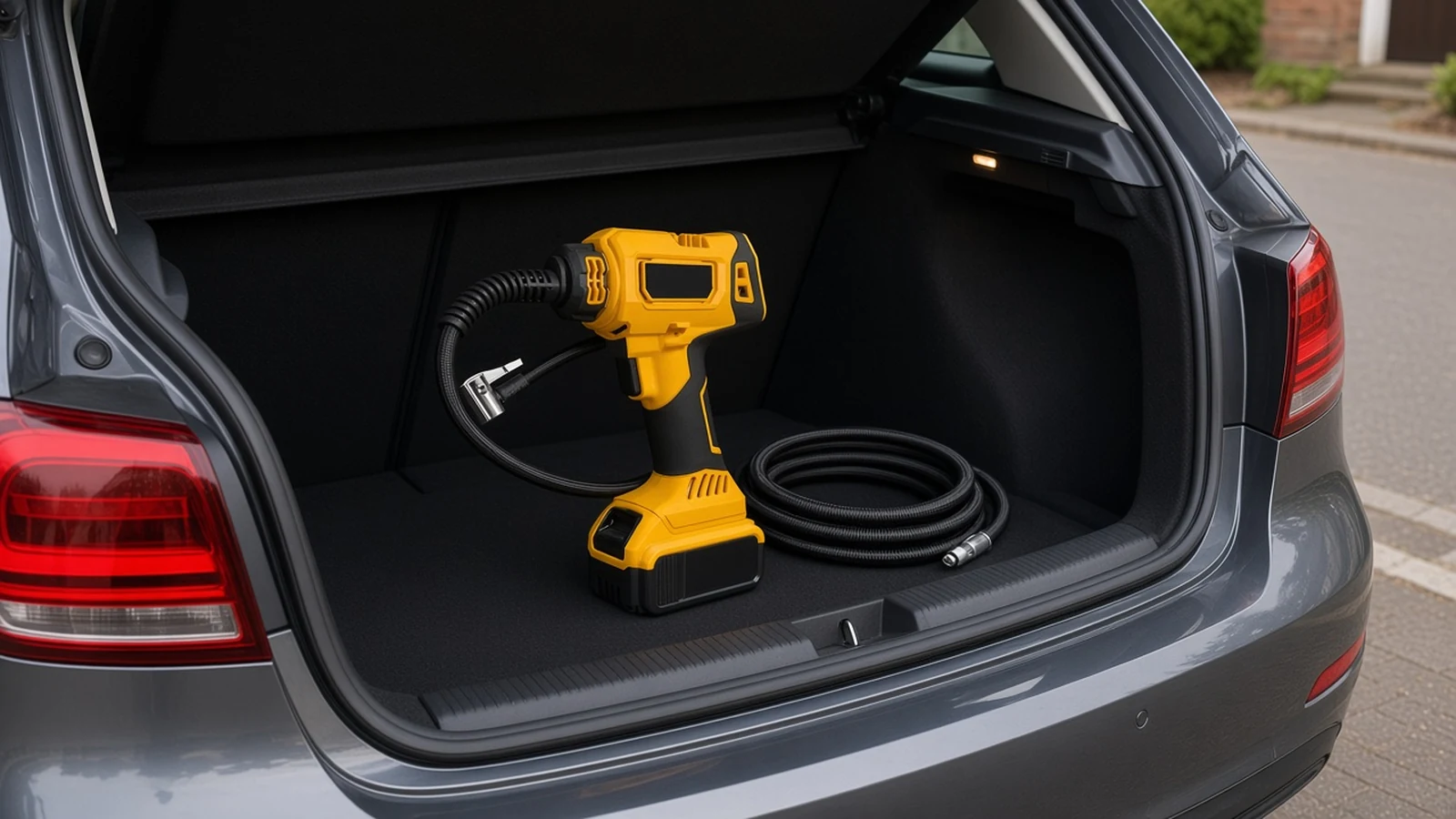
A digital auto-stop inflator can handle the first fix: restoring an intact tyre to the correct pressure. It can make the process calmer because you set the target and avoid repeated stop-start gauge checks. It cannot reset the car electronically, diagnose a sensor battery, repair a puncture, prove a tyre is legal or make sidewall damage safe.
When to call a fitter or garage
- The light stays on after all tyres are correctly inflated and reset by the handbook process.
- The warning flashes or the dashboard reports a system fault.
- One tyre loses pressure again within a short period.
- You can see damage, bulging, cracking, exposed cord or a deeply embedded object.
- You are unsure which tyres the vehicle monitors, especially after a spare-wheel change.
The clean sequence is pressure first, reset second, diagnosis third. Skipping the order creates confusion and can leave you driving on a tyre that was trying to warn you.