Weekly Cold Tyre Pressure Check Routine Uk
Direct answer: a good weekly routine is to check tyre pressures before the journey, while the tyres are cold, using the vehicle manufacturer's PSI or BAR figure. Check every road wheel, include the spare if the car has one, top up only to the correct target, then note any tyre that keeps falling.
The Highway Code's vehicle-maintenance annex says tyre pressures should be checked weekly when cold. That is a habit, not a one-off emergency task. The point is to find slow pressure loss before it becomes a warning light, a damaged tyre or a wasted morning.
The five-minute driveway checklist
- Find the target: use the door-card sticker, fuel flap, handbook or vehicle data, not the sidewall maximum.
- Choose the right unit: confirm whether the target is in PSI or BAR before touching the pump controls.
- Check all four corners: do not stop at the tyre that looks lowest.
- Top up cold: add air to the stated pressure and use auto-stop if your pump has it.
- Log the odd one out: if one tyre repeatedly needs more air, book an inspection.
RAC's tyre-pressure checking guidance gives the same practical direction: use the correct pressure source and include the spare where fitted. The spare is easy to forget because it is hidden, which is exactly why it should be in the routine.
Why cold matters
Cold does not mean freezing. It means before the tyres have been warmed by normal driving. A school-run forecourt stop is better than ignoring a flat-looking tyre, but it is not the cleanest way to build a weekly record. The driveway check gives you a calmer reading and more time to inspect the sidewall, tread and valve.
Do the check before the first regular journey of the week: Monday commute, Sunday family visit, or the morning before a long trip. The best routine is the one that fits into real life without requiring a special errand.
What to inspect while you are there
Pressure is only one part of tyre care. Look for cuts, bulges, exposed cords, uneven wear, nails, missing valve caps and anything that has changed since last week. TyreSafe's tyre safety FAQs point drivers back to manufacturer pressure sources and regular condition checks, which is the right mindset: air pressure is a warning system for habits, not a replacement for looking at the tyre.
When to change the routine
Use the loaded pressure if the handbook calls for it and the car is carrying holiday luggage, a roof box, passengers or towing load. Check more often during cold snaps, before long motorway journeys, after a kerb strike, and when a TPMS light has appeared. If one tyre keeps dropping, stop calling it "just air" and get the tyre, valve and wheel checked.
Where a portable pump helps
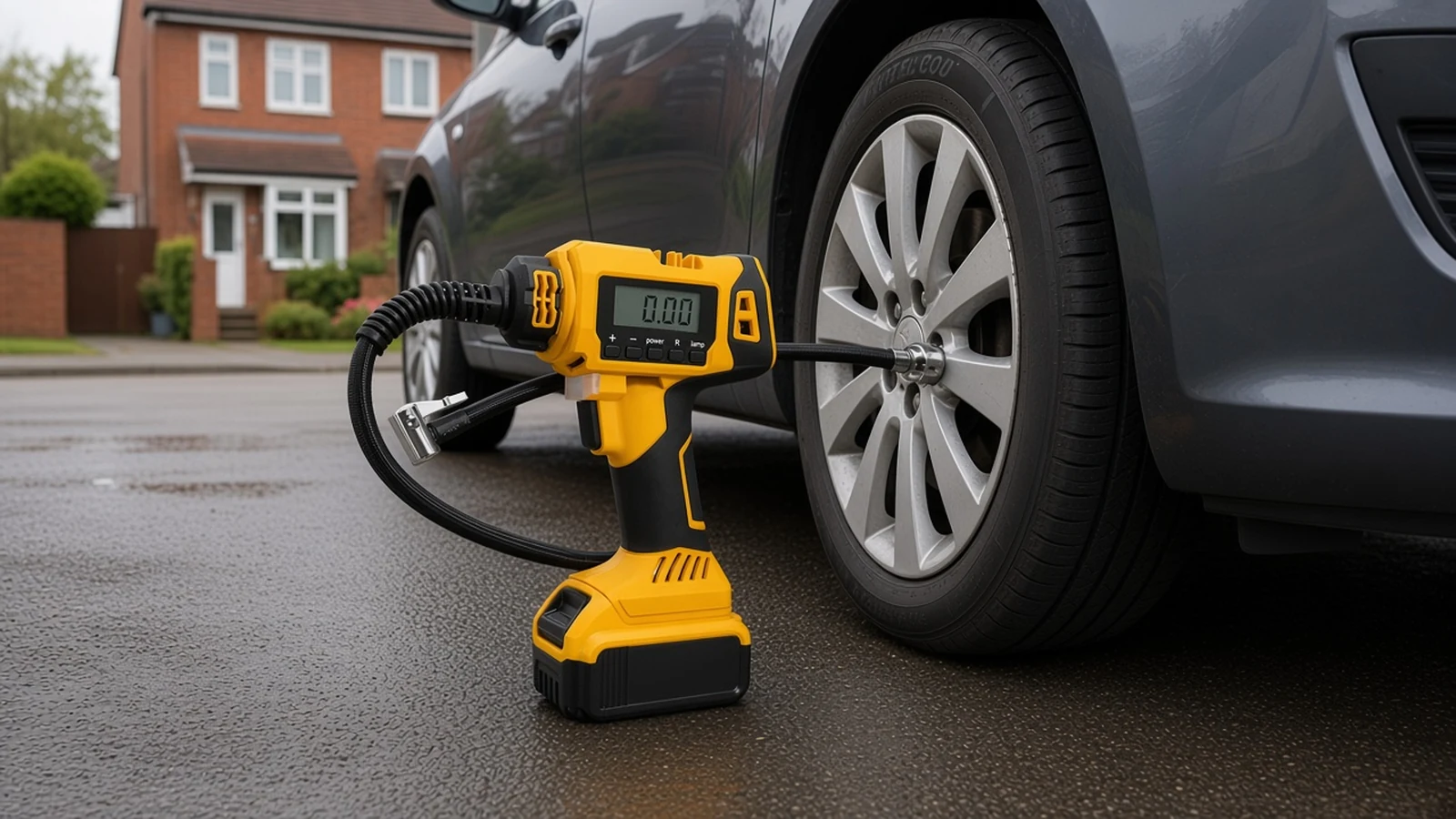
A digital auto-stop pump makes the routine easier because you can set the target and move wheel to wheel without driving to a machine. It is most useful when you already know the correct pressure and the tyre is intact. It does not replace tread checks, sidewall inspection, a spare-wheel plan or professional help for damage.
The low-friction version is simple: keep the pump charged, store valve adaptors together, and check pressures on the same weekday. The routine should feel as ordinary as checking fuel or screenwash, because that is how small maintenance jobs stop becoming roadside decisions.