When Not To Drive On A Soft Tyre Uk
Direct answer: do not drive normally on a tyre that is flat, visibly damaged, bulging, showing cord, losing air quickly or unable to be restored to the manufacturer's pressure. A quick top-up is only a short-term option when the tyre is intact, only modestly low and can hold pressure long enough for a safe, controlled next step.
This is a safety decision before it is a convenience decision. The Highway Code's vehicle-maintenance guidance tells drivers to keep tyres correctly inflated and to deal with tyre problems safely. If the tyre looks unsafe, the pump should stay secondary to getting out of danger and arranging help.
Do not drive as normal if you see this
- A flat tyre or a rim sitting close to the road.
- A sidewall bulge, split, deep cut or exposed cord.
- Air hissing from the valve, bead or tread.
- A tyre that drops again soon after inflation.
- Damage after a kerb strike or pothole hit.
- A warning light combined with pulling, vibration or steering change.
RAC's guide to illegal tyre conditions is useful background because pressure, tread and visible condition all sit together in roadworthiness. A tyre does not become acceptable simply because it accepted air for a few minutes.
When a careful top-up may be reasonable
A top-up can be reasonable when the tyre looks intact, the pressure is only low rather than flat, you are in a safe place, and you can restore it to the correct cold pressure. After that, drive gently to a fitter if the loss was unusual, or monitor it closely if all tyres were a little low after a temperature change.
Do not top up and then start a long motorway journey if one tyre was much lower than the others. The top-up has answered one question: "Can it hold air right now?" It has not answered why the air was missing.
Legal and practical boundary
UK rules are not written around whether you happen to own a pump. Regulation 27 of the Road Vehicles Construction and Use Regulations requires tyres to be inflated and fit for use. In plain English, a damaged, unsuitable or dangerously underinflated tyre is not made fit by convenience.
Soft tyre decision ladder
- Unsafe location: move yourself to safety first; do not crouch beside live traffic.
- Visible structural damage: do not drive; arrange breakdown or tyre service.
- Flat or rapidly losing air: do not rely on repeated top-ups.
- Soft but intact: inflate to the manufacturer pressure and reassess.
- Keeps losing pressure: book a fitter; suspect puncture, valve or wheel issue.
The honest role of a boot pump
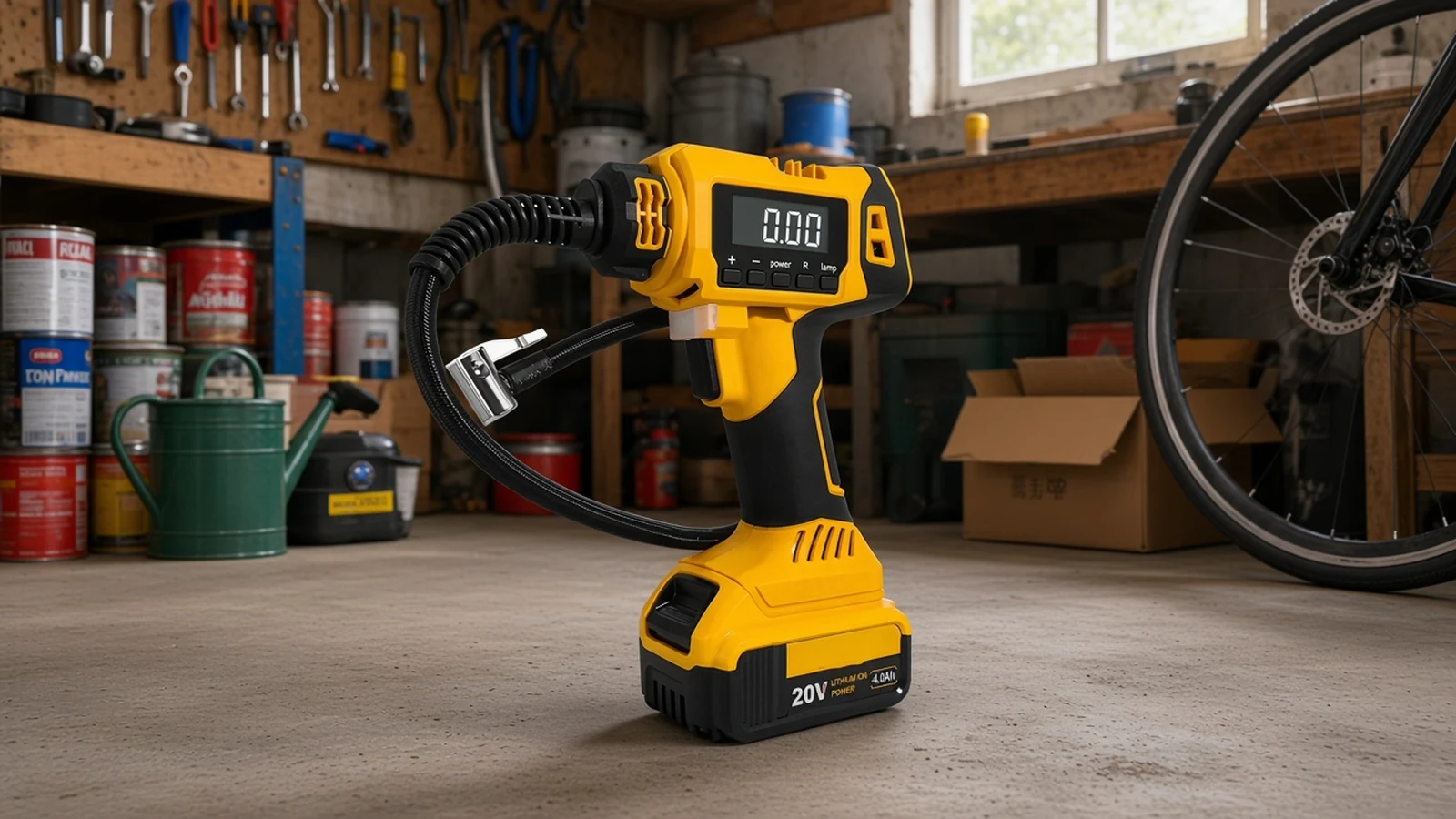
A cordless inflator is useful for intact soft tyres, weekly checks and controlled top-ups before a trip to a fitter. It buys time and reduces dependency on the nearest forecourt. It is not permission to keep driving on structural damage, and it is not a repair for a puncture that will not hold air.
The safest habit is to carry the pump and also know when not to use it. That judgement matters more than the tool itself.