Petrol Station Air Vs Portable Cordless Pump Uk
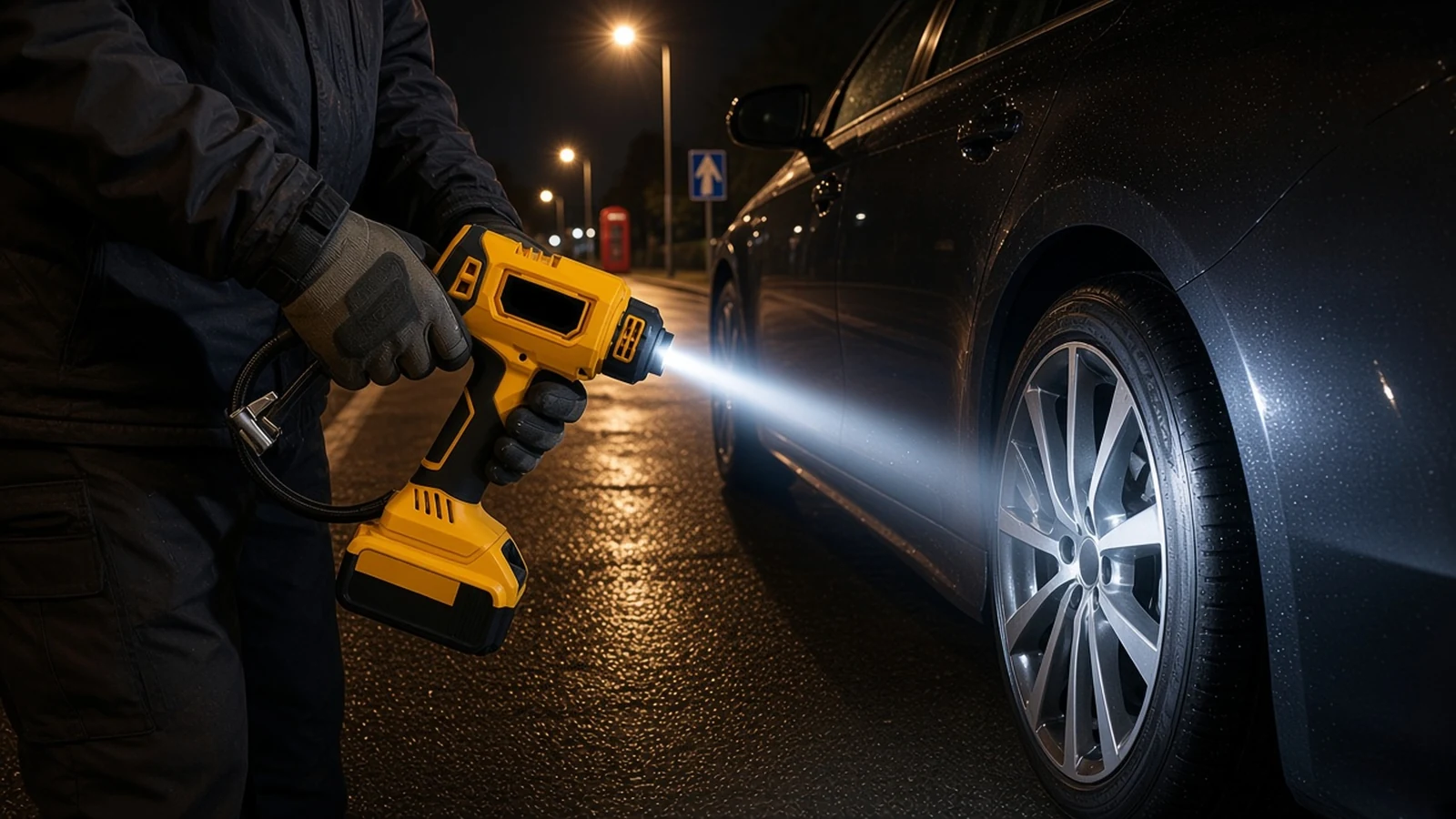
Forecourt air still works when the station is open and the machine is in good order. For UK weekly cold checks and closed-night emergencies, a boot cordless digital pump usually fits better because you can measure cold pressures on the driveway without driving first.
National Highways notes that fuel and service stations provide air machines and that you should set them to the recommended pressure. The catch is access hours and the risk of warm readings after you drive to the pump.
Forecourt air versus cordless boot pump
| Factor | Petrol station air | Portable cordless pump |
|---|---|---|
| Access hours | Depends on site opening | Anytime the battery is charged |
| Cold reading quality | Often after a warm-up drive | True cold check at home |
| Auto-stop convenience | Varies by machine | Common on digital consumer units |
| Multi-asset use | Car valves only | Often car, bike and ball adaptors |
| Ongoing cost | Per-use or free depending on site | Upfront purchase + USB charging |
The RAC tyre-pressure advice prefers cold checks because warm readings after driving can mislead. UK buyers actively compare cordless and plug-in portables for home and roadside use, as summarised in recent Parkers coverage of tyre inflator compressors.
A sensible UK buyer path
Keep weekly cold checks at home; treat station air as backup if the battery is flat. Skip a cordless-only plan if you need workshop continuous duty or very high commercial volumes.
For the weekly habit itself, use the weekly cold tyre pressure checklist. For dark winter starts, pair it with a first winter commute tyre-pressure routine. Mid-price cordless auto-stop units around everyday UK accessory budgets—including the Ipflinpor cordless tyre inflator—sit in that home-first niche without fabricated lab scores against named forecourt machines.